How to Choose a Thangka Painting: Deities, Meanings and Placement
A Thangka is more than a decorative painting. In Tibetan Buddhist tradition, it is a carefully composed sacred artwork used to support meditation, teaching and contemplation. Choosing one can feel difficult because every deity, colour and symbolic detail carries meaning. This guide will help you select a Thangka that suits your intention, space and connection to the artwork.
Begin with your intention
Before comparing sizes or colours, consider why you want a Thangka. Some people seek a focus for meditation, while others wish to create a peaceful home altar or collect traditional Himalayan art. There is no need to choose only by appearance. A painting that repeatedly draws your attention may reflect a quality you want to cultivate.
Understand common Buddhist figures
Shakyamuni Buddha
Shakyamuni Buddha represents awakening, wisdom and the historical teachings of Buddhism. His image is a balanced choice for meditation rooms, altars and quiet living spaces.
Green Tara
Green Tara is associated with compassionate action, protection and the swift removal of obstacles. Her active seated posture expresses readiness to help beings in need.
White Tara
White Tara is traditionally connected with compassion, serenity and long life. Paintings of White Tara often have a gentle visual presence suited to calm, reflective spaces.
Medicine Buddha
Medicine Buddha represents healing and the relief of suffering. His blue body distinguishes him from many other Buddha forms and reminds practitioners of balanced care for body and mind.
Chenrezig
Chenrezig, also known as Avalokiteshvara, embodies universal compassion. He is closely connected with the mantra Om Mani Padme Hum and is a meaningful choice for compassion practice.
Mandala paintings
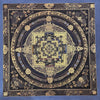
A mandala presents an ordered sacred universe. Detailed works such as a Kalachakra Mandala reward close viewing and are often selected for meditation, study or as a visual centrepiece.
Look for traditional quality
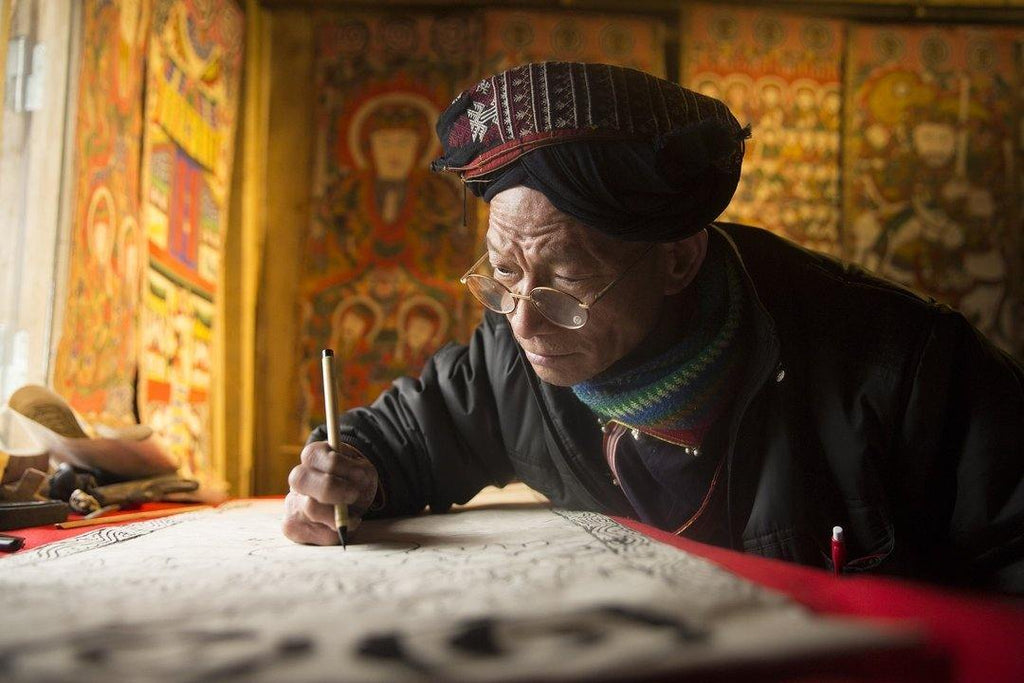
An authentic hand-painted Thangka should show careful line work, balanced proportions and deliberate iconography. Fine details around the eyes, hands, ornaments and surrounding figures require patience and skill. Natural mineral or stone colours, gold accents and cotton canvas are traditional features, although materials vary by workshop and quality level.
Small differences are normal in handmade art. They reveal the artist's hand and should not be confused with careless drawing. At Art of Tibet, our Thangkas are handcrafted in Nepal by artists trained in the traditional painting process.
Choose the right size
Measure the available wall or altar space before ordering. A compact painting works well above a small altar or desk, while a larger composition allows complex deities and mandalas to reveal more detail. Remember that silk brocade increases the finished dimensions. If you plan to use your own frame, choose an unmounted painting and confirm the canvas measurements.
Consider colour and atmosphere
Colour should come after meaning and quality, but it still affects the feeling of a room. Gold and warm red tones create a rich traditional presence. Blue and green compositions can feel calm and spacious. Dark protector-deity paintings are visually powerful and may be best for practitioners familiar with their symbolism.
Where should a Thangka be placed?
Traditionally, a Thangka is placed respectfully in a clean and elevated position. Avoid hanging it directly on the floor, in a bathroom or where cooking smoke, moisture and strong sunlight can damage the canvas. For preservation guidance, read how to care for a Thangka painting. A meditation room, altar area, study or quiet living space is usually suitable.
If the painting is used for practice, place it at a comfortable viewing height. You do not need an elaborate shrine; a clean, intentional setting is enough.
Choose connection over trends
The best Thangka is not necessarily the largest or most expensive one. Choose a figure whose meaning you understand, craftsmanship you value and image you will continue to appreciate. Learning the symbolism transforms the painting from an attractive object into a lasting companion for reflection.
Explore our hand-painted Thangka paintings or browse the Kalachakra Mandala collection.
Frequently asked questions
Can anyone own a Thangka painting?
Yes. A Thangka can be appreciated as sacred art, used in meditation or collected for its cultural and artistic value. It should always be treated respectfully.
Should I choose a framed or brocade Thangka?
Traditional silk brocade gives the work a ceremonial presentation. An unmounted canvas is more suitable when you prefer a conventional picture frame or have limited wall space.
Can a Thangka be placed in a living room?
Yes, provided the location is clean, respectful and protected from direct sunlight, smoke and moisture.
-
Posted in
Buddhist Art, Thangka Guide, Thangka Painting, Tibetan Art